A research team in University of Helsinki, Finland, has studied the nature and risk factors of an infectious pastern dermatitis outbreak among racehorses in Finland and identified the likely cause. The research, published in Journal of General Virology, hopes to enable better preparedness, diagnostics and guidelines for future outbreaks.
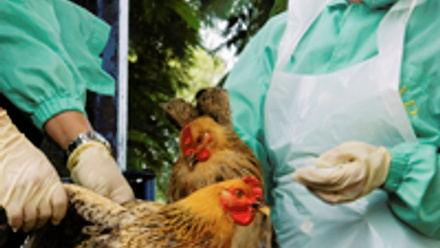
Emerging zoonotic diseases are infectious diseases that can be transmitted between vertebrate animals and humans, which have been newly identified, or are increasing in incidence or geographic range. Examples include Ebola, avian influenza and West Nile virus. They pose threats to global public health and economic security.
Endemic livestock diseases are found in cows, pigs, sheep and poultry and include mastitis, tuberculosis, avian colibacillosis, and salmonellosis. They are caused by infectious micro-organisms, some of which rapidly evolve to escape control.
Watch the Hot Topic Lecture Schmallenberg virus - fact from fiction, which featured at the Society for General Microbiology Spring Conference 2012 held at the Convention Centre Dublin, 26-29 March 2012.
The November 2003 issue of Microbiology Today focuses on emerging infection diseases of wildlife. Some of these pathogens affect a wide range of animals, including domestic species and humans, whereas others are confined to their wildlife host and can devastate populations.
An understanding of the relationship between a pathogen and its host is essential for the development of effective disease control measures. This volume focuses on interactions at the molecular level, specifically between the proteins of the infectious agent and the host that has been invaded.