In a first of its kind study, researchers have identified significant differences between the diversity of gut bacteria in grey squirrels compared to red squirrels which could hold the key to further understanding the ability of grey squirrels to outcompete red squirrels in the UK.
Researchers from the Commonwealth Scientific and Industrial Research Organisation (CSIRO), Australia’s national science agency, have detected antibodies to a filovirus in Australian bats for the first time.
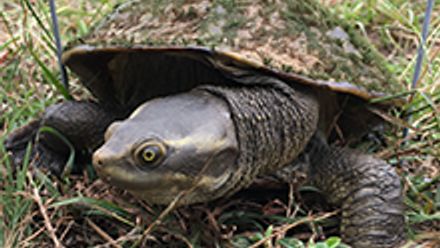
Research published in the journal Microbiology has found that a unique type of algae, usually only seen on the shells of turtles, affects the surrounding microbial communities. It is hoped that these findings can be applied to support the conservation of turtles. Previous research has shown that a diverse microbiome can protect animals against infections.
Today, at the Microbiology Society’s Annual Conference in Liverpool, scientists will show that the foam made by Trinidadian frogs represents a new, non-toxic antibiotic delivery system that may help to prevent infections.
Emerging zoonotic diseases are infectious diseases that can be transmitted between vertebrate animals and humans, which have been newly identified, or are increasing in incidence or geographic range. Examples include Ebola, avian influenza and West Nile virus. They pose threats to global public health and economic security.
Endemic livestock diseases are found in cows, pigs, sheep and poultry and include mastitis, tuberculosis, avian colibacillosis, and salmonellosis. They are caused by infectious micro-organisms, some of which rapidly evolve to escape control.
A by-product of biofuel manufacture can power microbial fuel cells to generate electricity cheaply and efficiently, according to scientists presenting their work at the Society for General Microbiology’s Autumn Conference. The work could help develop self-powered devices that would depollute waste water and be used to survey weather in extreme environments.
Watch the Hot Topic Lecture Schmallenberg virus - fact from fiction, which featured at the Society for General Microbiology Spring Conference 2012 held at the Convention Centre Dublin, 26-29 March 2012.
The November 2003 issue of Microbiology Today focuses on emerging infection diseases of wildlife. Some of these pathogens affect a wide range of animals, including domestic species and humans, whereas others are confined to their wildlife host and can devastate populations.