
Celebrating International Volunteer Day 2025 with our Society Champions
Below, you can find out more about why three of our Champions decided to join the Scheme and what they get out of it.
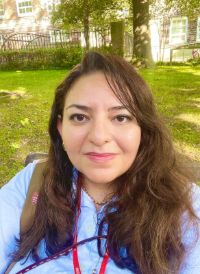
“Being a Microbiology Society Champion is a fantastic opportunity to connect with like-minded collaborators, run outreach events, conduct research and run extracurricular educational initiatives to grow the next generation of microbiologists.
I have organised a couple of antimicrobial resistance (AMR) events, including the STEM-Festival 2025 and World AMR Awareness Week (WAAW) events in 2024 and 2025 at Middlesex University, UK. Through which we have met participants and volunteers from different backgrounds, age groups and educational levels: postgraduates, undergraduates and secondary school students. The success of the events has also enabled me to report these achievements through the Society’s WAAW scientific blogs and showcase them at Annual Conference 2025.
Besides all the massive grant support from the Microbiology Society, it also enabled me start working on the first member-led Women Microbiologists Network. This dream only appeared possible through the Microbiology Society Champions Scheme.” Enas Newire (Middlesex University, London, UK)
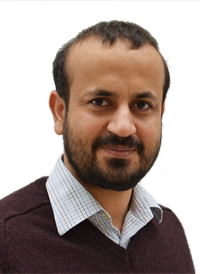
“Being a Microbiology Society Champion in Norwich, UK, means actively cultivating the scientific ecosystem around us. Norwich Research Park and the University of East Anglia, UK, are a hub of microbial research excellence. I am committed to strengthening connections, not only between researchers, technicians and institutions, but also with the wider community. Whether organising symposia, seminars and webinars, or engaging with the public about microbiology at Norwich Science Festival, it is about building bridges at all levels: between career stages, across disciplines and beyond the laboratory walls.
Through this role, we organised a Functional Multi-Omics Symposium at Quadram Institute in October 2025, bringing together scientists across disciplines to explore how artificial intelligence and machine learning can integrate multi-omics data and create powerful new methodologies to address antimicrobial resistance, sustainable agriculture and microbiome health.” Muhammad Yasir (Quadram Institute, UK)
“The Microbiology Society Champions scheme has been a great opportunity for me to get involved with engagement and outreach activities.
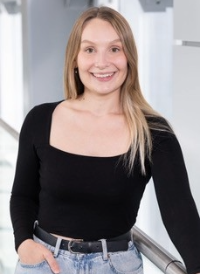
Earlier in the year, I had the amazing opportunity to give a talk at a local school about the bugs in your gut (microbiome), how we study them and why they are important.
Being part of the Society has also given me access to resources to organise and run additional events. For World Microbiome Day, myself and others from the Oxford Centre for Microbiome Studies, UK, invited people to ‘streak their own culture out’ on petri dish cheesecakes at our Institute, which was a fun way to raise awareness of the day and microbiome science.
I find it rewarding and important to communicate what we do as researchers to our peers, those outside of our field and the public. I’m looking forward to doing more outreach in the future!” Rebecca Jeffery (University of Calgary, Canada)
Thank you to all of our Champions, as well as volunteer members who sit on the Trustee Board, Advisory Council, Committees, Panels, Divisions and Editorial Boards, for their continued support of the Society.
If you would like to get involved and become a Microbiology Society Champion, or take part in various other opportunities, have a look at our Get Involved page. Alternatively, you can email us via getinvolved@microbiologysociety.org.