Microbiology Society briefing on climate change
"While the impact of climate change is here with us, microbes are a catalyst to regain our world" - Professor Afolake Olanbiwoninu, Lecturer and Researcher from the Ajayi Crowther University, Nigeria.
The effects of climate change are already evident across the globe. Habitats are disappearing, sea levels are rising and the polar ice caps are melting. The communities most affected are struggling to cope with a rapidly changing world.
In its new climate change report, the Intergovernmental Panel on Climate Change (IPCC) assesses the scale of the impacts and highlights solutions to combat the crisis. It stresses that, with rapid action, the worst risks could be avoided. Steps are already being taken on the international stage. Last year, the 26th UN Climate Change Conference of the Parties (COP26) saw the world come together to accelerate action to tackle the climate crisis through collaboration between governments, businesses and civil society.
One important and often overlooked contributor to both the monitoring and the mitigation of climate change are microbes. Microbes are directly associated with both the production and consumption of greenhouse gasses, making them an important component in climate change models. Microbiology research has revealed ways in which we can harness the power of microbes to avoid climate catastrophe.
The Microbiology Society draws on this perspective in its recent climate change briefing ‘Microbes as our allies’ through addressing the following three key areas;
- The importance of microbes for climate change
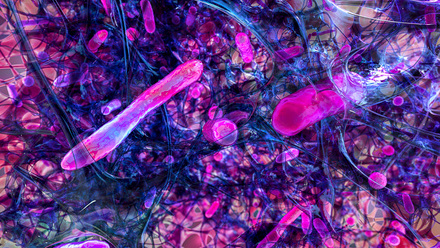
Microbes play key roles in biological systems, contribute to our changing environment and are intricately linked with climate change. They exist in our oceans, deep in the soil and as high up as the stratosphere, yet less than 1% have been discovered and their extensive influence on our planet is therefore largely unexplored. - The disruption of microbiomes caused by climate change
Like all living things, microbes are affected by and struggle to cope with the devastating consequences of climate change such as ocean acidification, soil warming and melting of permafrost. Rapidly changing environments have critically jeopardised their ability to survive and are shifting the composition of microbial communities. - The potential of microbes to combat climate change
We can harness the capabilities of microbes to combat climate change. By employing microbes, we can reduce greenhouse gas emissions and transform how we manage waste, produce crops and generate electricity to limit our impact on the environment
Download the full briefing and find out more about the role of microbiology in addressing the world’s biggest challenges on our website.
Image: iStock/chonticha wat