COVID-19 Response Case Studies

Aligned with our mission to advance the understanding and impact of microbiology, the Society reached out to our community of microbiologists to share their experiences in responding to SARS-CoV-2. We aim to showcase the perspective of scientists during the COVID-19 pandemic and the variety of roles adopted to mitigate the global crisis. 

Ian-Humphreys-and-Eddie-Wang-case-study.jpg

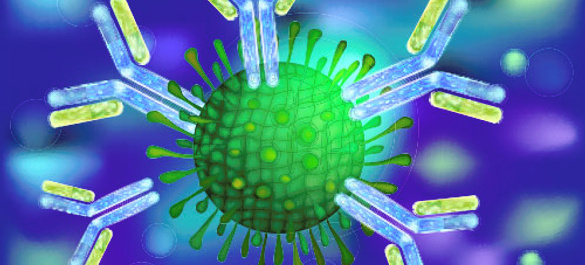
Understanding how antiviral antibodies can activate natural killer cells to improve viral control

This is the first case study in our series that comes from a group of Project Investigators (PIs). Professor Ian Humphreys, Professor Eddie Wang, Professor Richard Stanton and Professor Alan Parker are from the Viral Immunology Research Group at Cardiff University, UK. Collectively, they describe how they responded to the COVID-19 pandemic, the challenges they faced and how basic microbiology and immunology are critical components of any pandemic response.
Cartoon-style waves in varying levels of blue opacity, surrounded by yellow viruses.

Water-Based Epidemiology – finding a needle in a very dirty haystack

This case study comes from a research group led by David Graham, a Professor of Ecosystems Engineering at Newcastle University, UK. The account explains how the group developed an array of methods for quantifying viral load in sewage, creating the new science of water-based epidemiology, and how they employed their knowledge across various projects.

Richard-Birtles-case-study.jpg

The epidemiology of COVID-19 in Ugandan settlements and neighbouring communities

This case study is written by Professor Richard Birtles, Chair of Biomedicine at the University of Salford, UK. Richard recounts his experience of establishing COVID-19 diagnostics facilities in Uganda, creating capacity for in situ SARS-CoV-2 whole genome sequencing, and how he used these new resources to clarify virus transmission routes.

Andrew-Martin-case-study.jpg

Locking down labs and setting up COVID-19 testing facilities

This case study is written by Andrew Martin, a laboratory technician from the University of Salford, UK. He gives his perspective of how lockdown unfolded and how he used his time away from the lab to volunteer at the Lighthouse COVID-19 Testing labs at Alderley Park, near Manchester, UK.

Illustration of arms reaching upwards, pointing towards tablets, phones and a laptop that display COVID-19 related graphics.

Basic microbiology knowledge is crucial to the understanding of new emerging diseases

This is the second case study written by Dr Chloe James, a Lecturer in Medical Microbiology at The University of Salford, UK. In this case study, she focuses on the media engagement aspect of her response to the pandemic, including the challenges of commenting on highly politicised and emotive issues.

Sharon-Brookes-case-study.jpg

Searching for SARS-CoV-2 in animals

This case study was submitted by Dr Sharon Brookes, who is currently the Lead Scientist for Animal and Zoonotic Viral Diseases at Animal and Plant Health Agency (APHA). She discusses the projects that the APHA have been are involved with since the start of the pandemic, exploring SARS-CoV-2 in animals and its ability to transmit to, from and between people and animals, the development of new testing techniques and how these experiences aided the development of the APHA coronavirus team.

Ed-Louis-case-study.jpg

Using baker’s yeast to develop reference viral antigens of SAR-CoV-2

This case study is written by Professor Ed Louis of the University of Leicester, UK and Chief Scientific Officer of Phenotypeca Ltd. Ed’s account highlights the how collaboration between academia and industry can aid innovation, the challenges of establishing new working practices during lockdown and the joy of getting his hands dirty at the lab bench after many years.

X-ray of chest.

Rapid development of an international radiographers online training resource

This case study is written by Dr Chloe James, a Lecturer of Medical Microbiology at the University of Salford. She recounts her experience of contributing to the University of Salford-led effort to develop new e-learning resources for radiographers caring for patients with COVID-19. She highlights the difficulties of working on this fast-paced, international effort involving over 40 people whilst working remotely.

Suzy-Pickering-case-study.jpg

Evaluating the utility of SARS-CoV-2 serological and rapid antigen lateral flow devices

This case study was written by Dr Suzy Pickering, a Research Fellow at King’s College London. Suzy volunteered to help at a local COVID-19 testing facility to increase testing capacity. She describes the highs and the lows of this experience, including times where she felt she was “swimming against the tide”.

Megan-Taggart-case-study.jpg

From PhD student to COVID-19 testing scientist

This case study was written by Megan Taggart, a PhD candidate from Ulster University. She explains how, as a first year student, she suspended her PhD to become an RNA extraction scientist at her local COVID-19 testing labs. Megan details her time there and how it aided her development.

A collection of red, light blue and dark blue graphics depicting various activities surrounding SARS-CoV-2, including sanitation and detection.

Saliva versus nasopharyngeal swab specimens for the detection of SARS-CoV-2

This case study comes to you from Dr Anne Wyllie, a Research Scientist at the Yale School of Public Health. She gives us a unique perspective of the pandemic from our neighbours over the water in the US. Her case study highlights the bottlenecks that were present in mass scale testing at the start of the pandemic and how she contributed to overcoming these problems.

Lena-Ciric-case-study.jpg

The interface between microbiology and civil engineering

This case study is courtesy of Dr Lena Ciric, a Senior Lecturer in the Department of Civil, Environmental and Geomatic Engineering at University College London. She discusses her work on research projects during the pandemic, including a collaboration with Transport for London (TfL), and the associated challenges.

Suzy-Moody-case-study.jpg

The challenge of balancing an academic career with clinical practice

This case study is written by Dr Suzy Moody, a Lecturer of Eukaryotic Microbiology at Kingston University London who’s research specialises in bioremediation of plastics. However, before she embarked on a PhD she was an Intensive Care Unit (ICU) nurse. Here, she tells us about juggling her academic responsibilities with returning to the wards to treat COVID-positive patients.

Close-up of blue, yellow and red viruses icons lined up.

Understanding the determinants of resistance to type I interferons and IFITMs in HIV-1 envelope and SARS-CoV-2 spike

This case study is written by Helena Winstone, a PhD Candidate at King’s College London. She gives a research student’s perspective of how a project can be quickly derailed by worldwide events and can pivot to explore new avenues, as well as the frustrations involved with studying a readily-mutating virus and the associated mental health effects.

Alberto-D-Lopez-Munoz-case-study.jpg 1

Exploring how the cell surface SARS-CoV-2 nucleocapsid protein modulates innate and adaptive immunity

This case study was written by Alberto D. López-Muñoz, a postdoctoral researcher. His account of the pandemic focuses on using immune modulation strategies to study SARS-CoV-2; volunteering for a Phase III clinical trial of the COVID-19 vaccine; the difficulties of travel restrictions and being featured in the “Postdoc Profile” series by the National Institute of Health.

Blue background with DNA helix structures.

The COVID-19 Genomics UK Consortium and genomic surveillance

This case study comes from Andrew Page, Head of Bioinformatics at the Quadram Institute in Norwich. He shares with us his experience of helping to establish one of the founding sequencing centres for the COVID-19 Genomics UK (COG-UK) Consortium, and how his work there aided the government and impacted on the wider society

Rachael-Tarlinton-case-study.jpg

A mid-career virologist’s pandemic!

This case study is written by Rachael Tarlinton, an Associate Professor in Veterinary Virology at the University of Nottingham. Her account of the pandemic expresses the challenges of teaching, supervising and researching throughout lockdowns; how the pressure of this affected many researchers’ mental health; and the media engagement duties of scientists.

Maia-Kavanagh-Williamson-case-study.jpg

Reverse genetics to characterise SARS-CoV-2

This case study is from Dr Maia Kavanagh Williamson, a postdoctoral research associate in Andrew Davidson’s lab at the University of Bristol. As the COVID-19 pandemic emerged, her research pivoted from RNA viruses HIV and Dengue, to using reverse genetics approaches to characterise basic properties of SARS-CoV-2. Here she details her experience of working throughout the pandemic.

Person coughing, with hand over their mouth and large virus graphics being expelled from their cough.

The study of the airborne longevity of SARS-CoV-2

This case study is written by Henry Oswin, a PhD Candidate from Professor Jonathan Reid’s research group at the University of Bristol. He discusses how his project to develop and optimise an instrument to study the airborne longevity of E. coli rapidly adapted to study SARS-CoV-2. He details the technical challenges, as well as his own personal hurdles, that lead to significant progress in understanding the airborne longevity of the virus.

A graphic featuring the globe in centre, surrounded by red viruses.

The challenges of being a virologist during the COVID-19 pandemic

This case study is from Dr Elisabetta Groppelli, a Lecturer in Global Health at St George’s University of London, who led the establishment of SARS-CoV-2 research at the Institute for Infection and Immunity. Elisabetta discusses the challenges of starting a new position and establishing a research group during a pandemic, her involvement with public engagement and the personal challenges of living through the first pandemic of our lifetime.

Several pink, purple, orange and blue speech bubbles on white background.

Stepping into public outreach during the COVID-19 pandemic

This case study was written by Dr Cheryl Walter, a Lecturer of Microbiology at the University of Hull. Cheryl discusses her involvement with public outreach, education, consultancy and the development of a SARS-CoV-2 point-of-care testing device. This work enabled her to use her virology skills and knowledge to adapt to the ongoing situation.

Multicoloured viruses.

Screening antiviral drugs against the envelope (E) protein of SARS-CoV-2

This case study was written by Dr Gemma Swinscoe who transitioned from being a PhD student to a Postdoctoral Research Assistant in mid-2020. The study focusses on Gemma’s research investigating the envelope (E) protein from SARS-CoV-2, the challenges that she faced during the first 18 months of the pandemic and her thoughts on the influence that the pandemic has had on microbiology.

Rob-Kingsley-case-study.jpg

Using genomic surveillance to identify waves of SARS-CoV-2 infections in Zimbabwe

This case study was written by Professor Rob Kingsley, Group Leader at the Quadram Institute. The study focusses on Rob’s genomic surveillance work in Zimbabwe through a partnership with the National Microbiology Reference Laboratory in Harare.


Image credits:

iStock/Sakurra
iStock/EmaAlmqvist
iStock/Eda Hoyman
iStock/PBFloyd
iStock/zubada
iStock/nopparit
iStock/Dr_Microbe
iStock/kool99
iStock/reklamlar
iStock/VictoriiaIlina
iStock/ChansomPantip
iStock/RomoloTavani
iStock/DrAfter123
iStock/fotomay
iStock/metamorworks
iStock/ismagilov
iStock/tutti-frutti
iStock/KrulUA
iStock/smartboy10
iStock/Gilnature